

Suppose that you have two uncles. They are from opposite sides of the family, but they live near one another in the same town. You are very fond of them both, though they themselves are as different in character as granite is from talc. Let’s say that one of them carouses, swears, puts gel in his hair, laughs very loudly (especially at his own jokes), drinks too much, and sometimes has to be put to bed. He shows up for family gatherings only when food and liquor are involved, and you often wish he would just stay away, and yet…somehow you cannot imagine the holidays without him.
The other uncle is the epitome of provincialism and Old Worldliness; he stands up very straight, wears a tie, and with twinkling, patriarchal eyes, he constantly nods knowingly. This one irritates you to distraction with his fastidiousness, his self-acclaimed expertise on every subject that arises in conversation, and his prudish table manners. Still, if some disaster were to occur - if the house caught fire or a tree fell on the garage - he would be the one you would look to for instructions and orders, and you would follow them to the letter.
One man you love for his joyful wildness, the other for his quaint stoicism. Just don’t leave the two of them in the room together, for they have never been able to get along.
Would it be a faulty conflation to say that, in the same way, a traveler can love both Ireland and England? Of course not. Though my analogy may be constructed of stereotypes, both uncles are lovable, as are both places. And the people of both places are kind and welcoming to the travel-worn stranger. It is mainly one another that they cannot seem to abide.
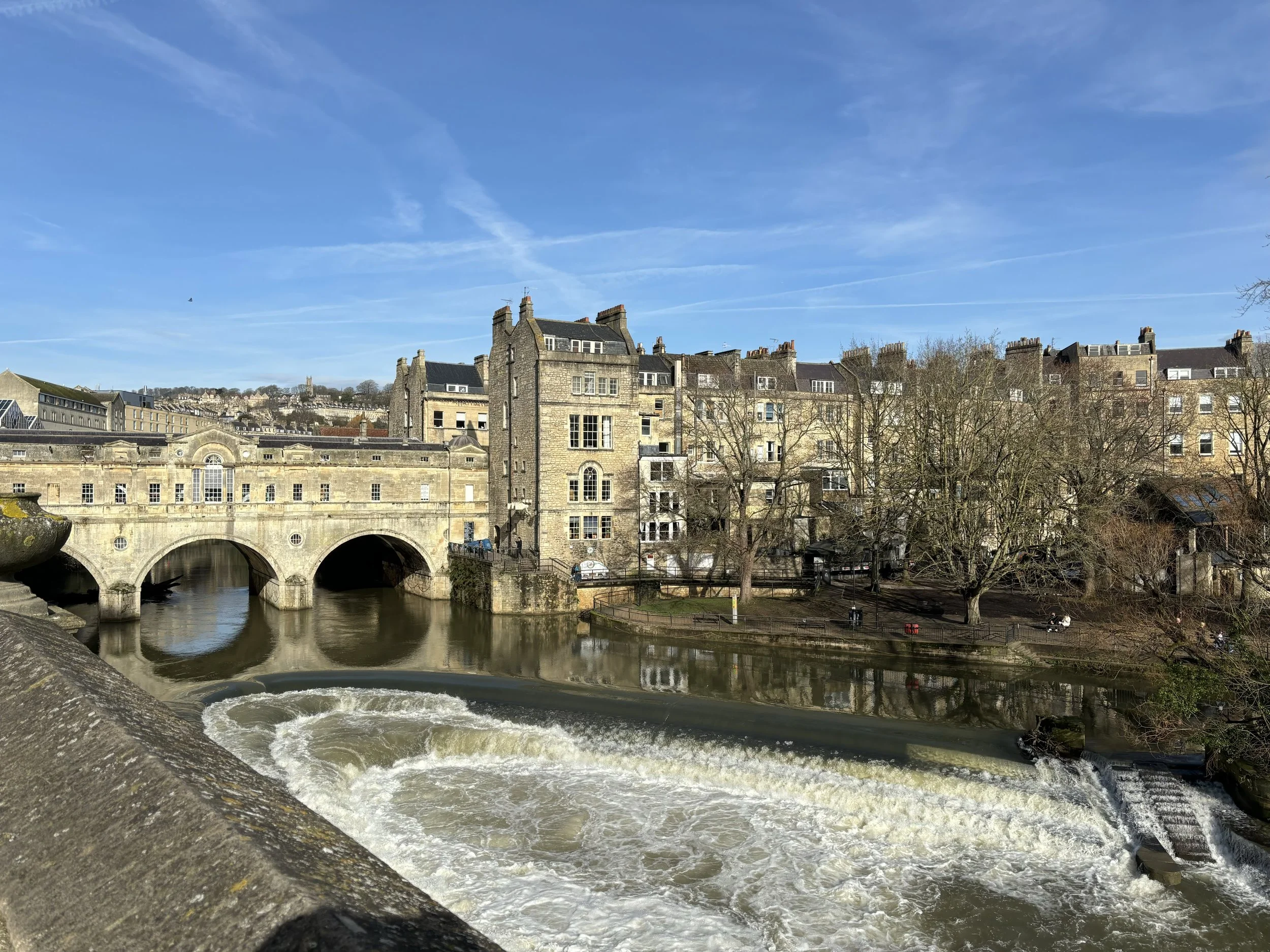
Bath, Avon River, England
So I had been told anyway, and then when I first traveled in the British Isles in 1985, my experience affirmed such. For many years, I had an English friend (now deceased) who lived in a small village near Bath, on the Avon River, and as far as I know, he never ventured into Ireland, believing that it was enemy territory. Chris loved to travel, and he was perfectly willing to come to America, where in the course of several visits he suffered many torments: he fell asleep on a sun-slathered Florida beach, and when he woke up, he was a lovely persimmon color; he got his bare foot caught in the spokes of a bicycle; he inadvertently stood on an anthill while drinking beer and telling funny stories…until he looked down at his legs and saw the horrors taking place. These were just three of the many calamities my friend endured during his travels in the U.S., and still he was always eager to return. But to Ireland he would never go.
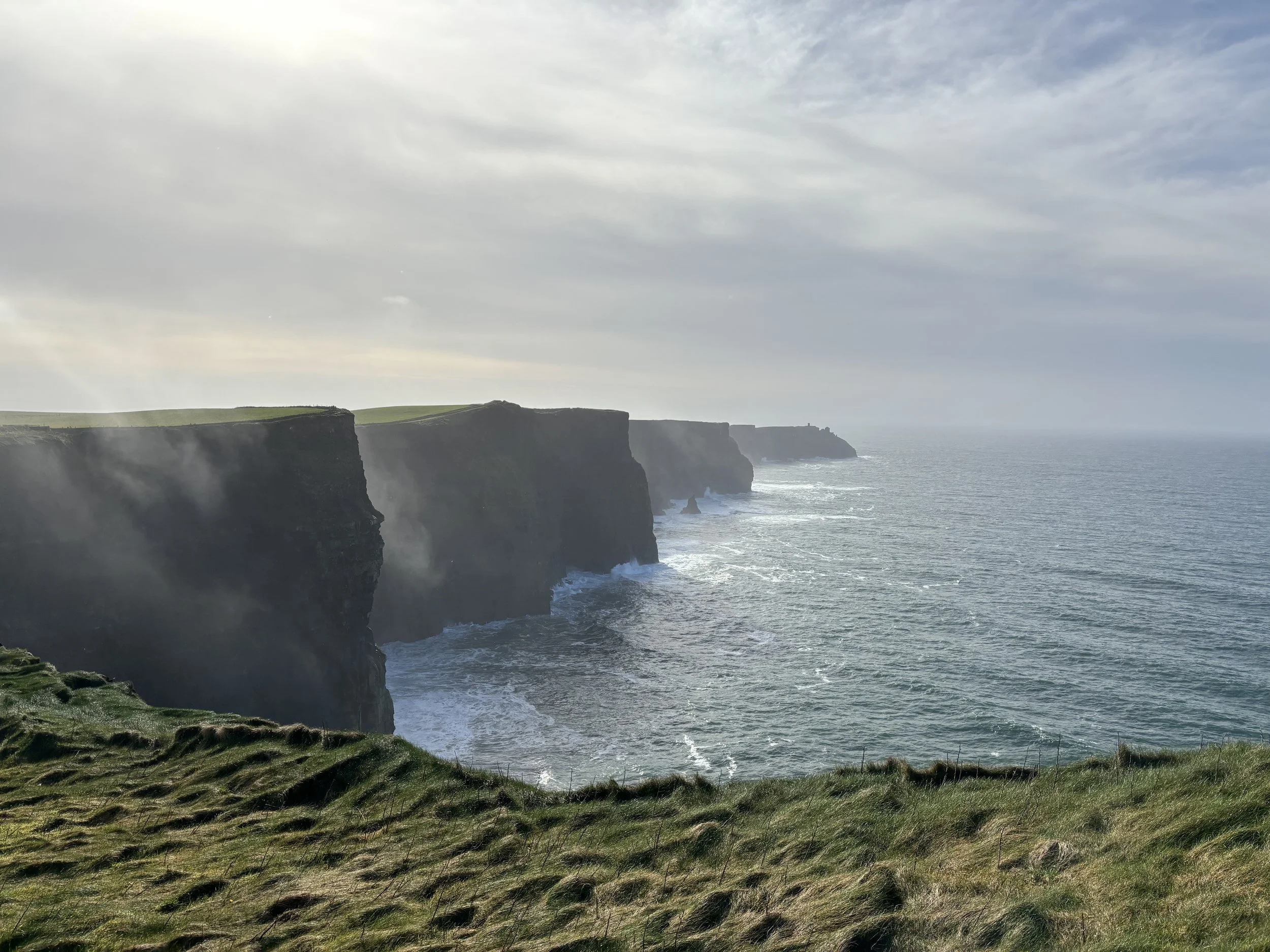
Cliffs of Moher, Ireland
Like many Americans, I have a rather shaky understanding of this aversion. I know from my school lessons that Ireland was under British rule roughly from the 1100s until 1921, when the Republic of Ireland gained its independence. But the majority of people living in the northern counties of that island decided they wished to remain within the United Kingdom, since their English and Scottish ancestors had settled there in the 1600s. Thus Northern Ireland became a sovereign state under the British Crown.
Those are bare historical facts, but the real truth of the matter is far more complex. Religion has been very much a factor. If you were awake in your World History class in high school, you might recall that England broke with the Catholic Church in 1534 because the Pope had refused King Henry VIII’s demand for an annulment of his marriage to Catherine of Aragon, and Henry had undertaken to start his own Protestant church - the Church of England. One can see how this might have elicited conflict in staunchly Roman Catholic Ireland - again, except for those who would settle in the country’s northern reaches in the coming years. But there were Catholics in that area, too, and they became the objects of discrimination; in turn, apparently, they did not appreciate paying high taxes to the British monarchy (this may ring familiar to students of the American Revolution); nor did they have much respect for their wealthy English landlords. The tension was left to simmer for centuries longer, until it boiled over in the late 1960s into the time period known as the Troubles. For thirty years, acts of violence would proliferate - some of them in the course of English oppression, and some others carried out by paramilitary groups such as the Provisional Irish Republican Army. Among these events were: the 1969 riot that would come to be called the Battle of Bogside; the Bloody Sunday march of 1972, when British soldiers opened fire on protestors, killing 13 of them; and the infamous Guilford pub bombings, carried out on British soil at Surrey in 1974. There were many more.
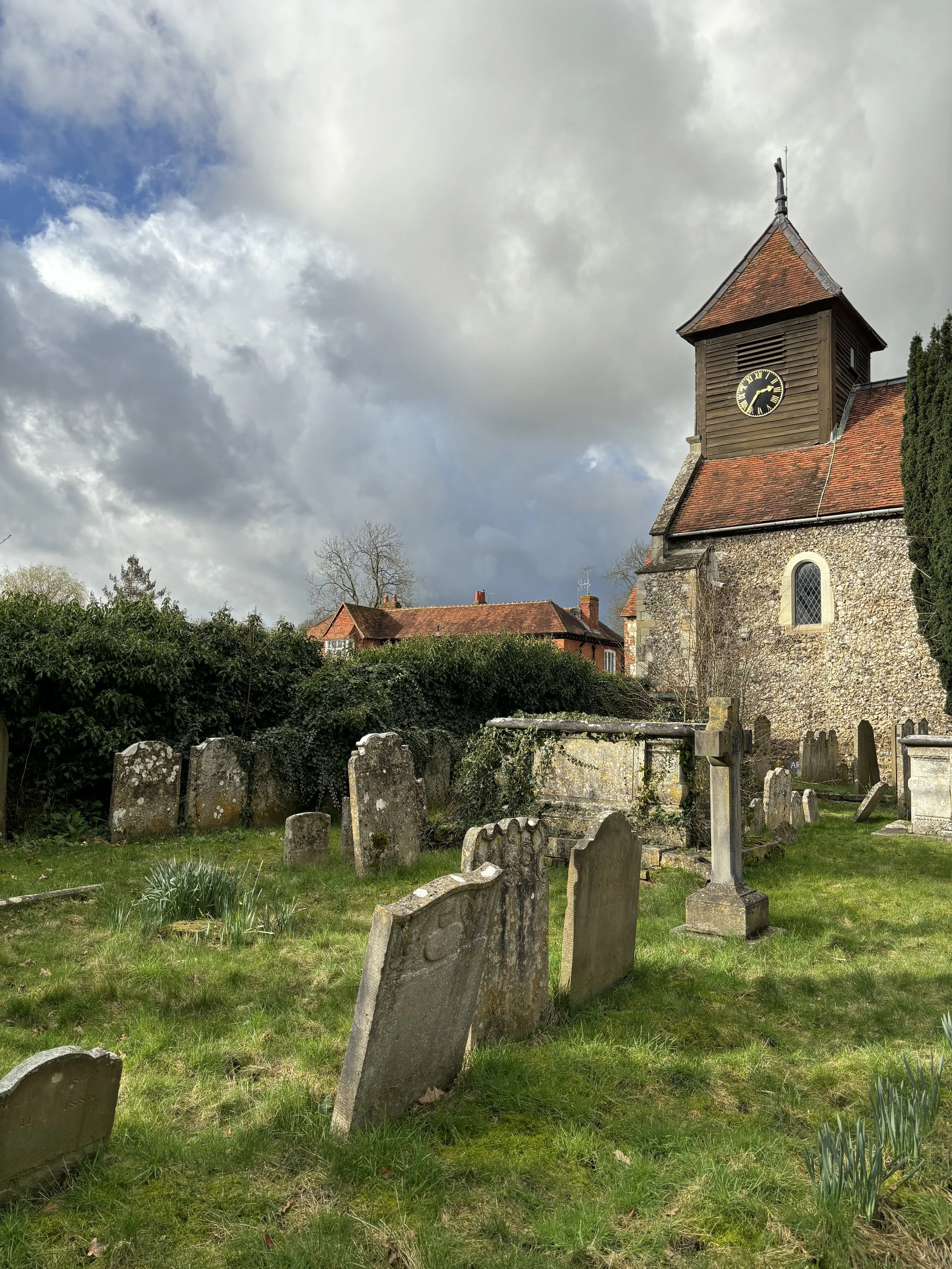
Hurley, England
At last, in 1998, the Good Friday Agreement established a power-sharing government in Northern Ireland, and the conflict was ended.
We can go back even further still, into the shadows of an ancient world in which records were kept in the form of tales told by scops and songs sung by bards. For example, old songs about Brian Boru, High King of Ireland in the early 11th century, were part of an oral tradition, so it’s difficult to date their exact origin; the same is true of English ballads such as “Barbara Allen” and songs and stories about Robin Hood and Judas (yes, that Judas - the one who betrayed Jesus). King Arthur of legend, who may also have been a real person (still, an “enigma,” according to the Stanzas of the Graves, compiled by Taliesin), was significant symbolically because his mother, Igraine, was Celtic, but his father, Uther Pendragon, was Briton, and in the tales, Arthur does establish peace between old enemies - for a while. In any case, such stories and poems are like the shadows of an age when old warrior societies were gradually settling into agrarianism, displacing one another in the process.
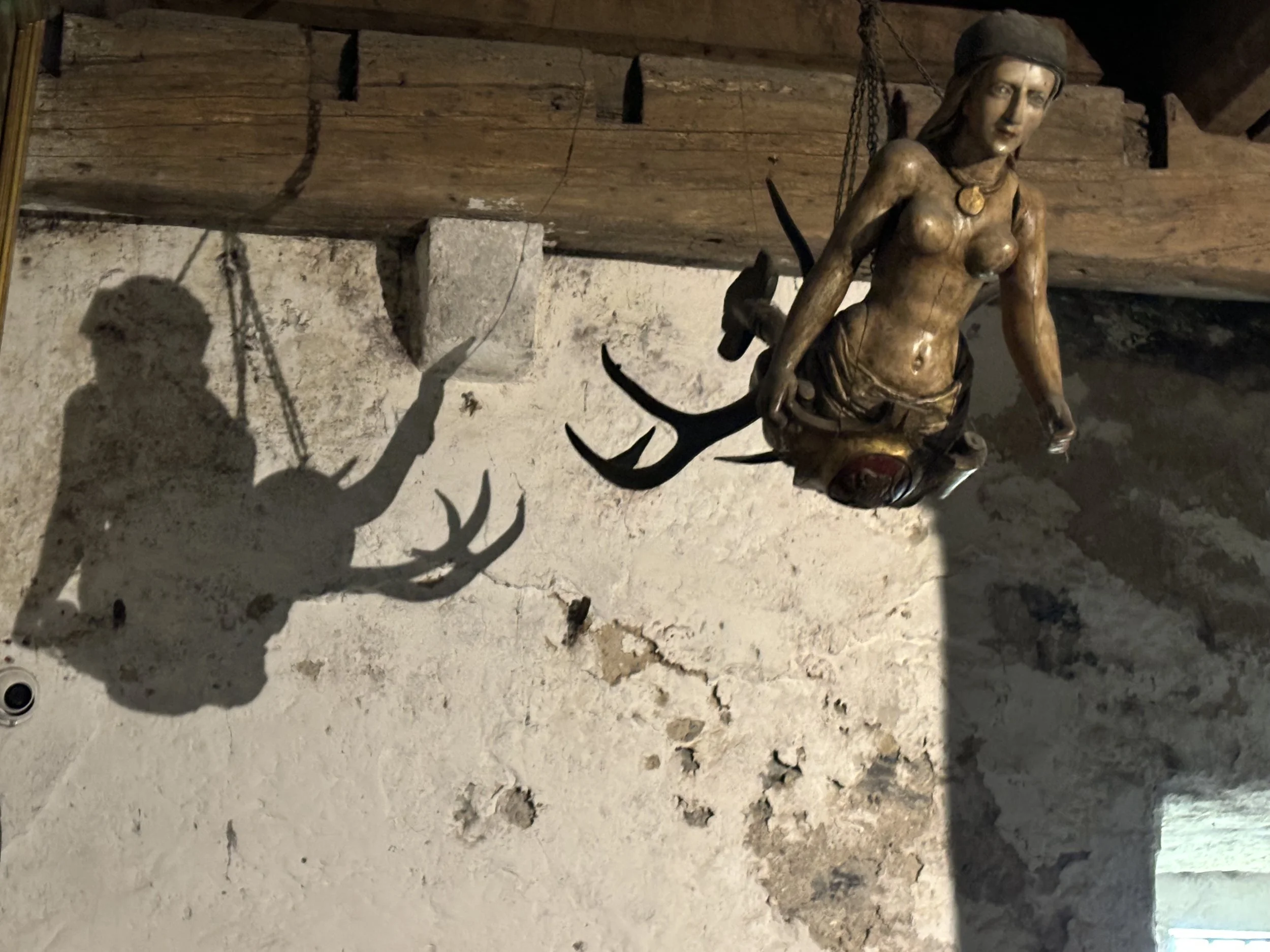
Bunratty Castle, Ireland
In fact, as a culture, the Celts, who had arrived in the British Isles as early as 900 BC, underwent dramatic changes as their lives were affected over time by incoming groups - first the Romans, and later by invading Anglo-Saxons who drove them from the richer farmlands of England into Wales, Scotland, and Ireland. Hence, a great many people in Ireland today are of Celtic descent. Who can say whether their collective DNA might not hold memories, as it were, of their ancient enmity with those back in England who had displaced their ancestors?
“Who can say?” In that question lies the rub. Although I often wonder who I might be now if I had been born in Ireland or England, or at least had moved there as a young man, in truth, I have not spent all that much time in either place, really - maybe between three and four months altogether in England, a month or so in Ireland. In my reading and studying, however, I have traveled there far more extensively: I have wandered through Dorset and Somerset with Thomas Hardy, I have sat with Shakespeare’s Falstaff and Prince Hal in the Boar’s Head Pub in London, and I have roamed the windy hills of Scotland with the companionable Bobby Burns. I have been shown parts of Ireland by Yeats, Frank McCourt, and of course, James Joyce, that I could never have seen otherwise. I have no doubt that in body I will return to both countries, but I am both cursed and blessed in that the places I am always searching for are the ones I have read about. Can they really ever be found?
But I know the answer to that. It is the same one I come up with whenever I wonder whether those two feuding uncles - the ones who seem never to get along - will ever set aside their differences and share a Christmas toast together. Alas, I suppose that I, always the naive idealist, will simply have to drink to them both.
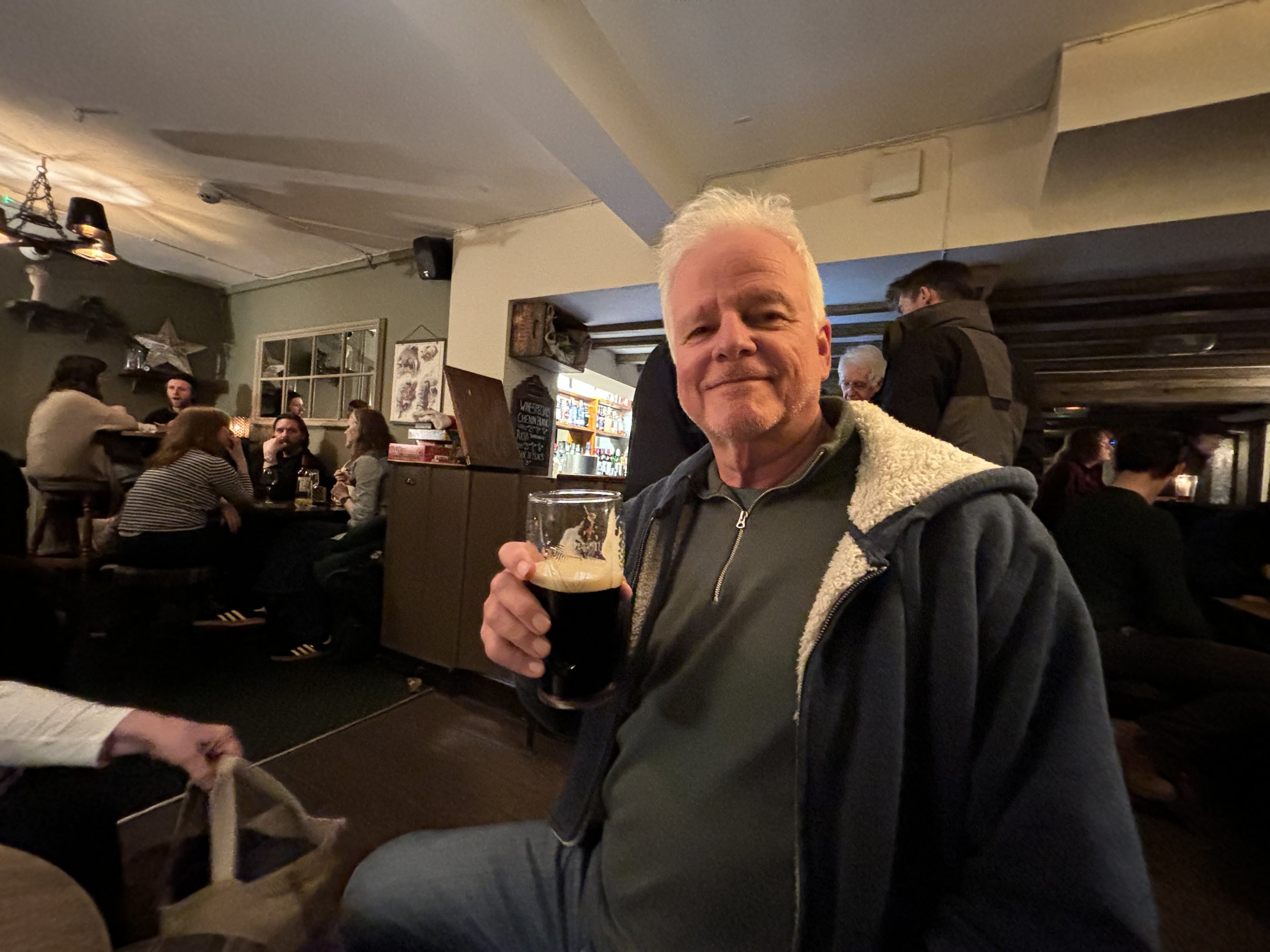
Goering, England
